Barclaycard, via IBM · Northampton & remote, 3 months
Axe the Fax, chargebacks portal
At a glance
- Client
- Barclaycard, via IBM
- Role
- Senior UX Designer, via IBM
- Timeline
- Northampton & remote, 3 months
- Sector
- FinTech
Context: Chargeback dispute portal built to replace fax and post
Try the prototype
Open in Marvel (opens in a new tab)Loads from Marvel when you press play. Best on a laptop or desktop.
1 screen
To decide a case, cut down from a busier first draft
5 sec
Target time to read a case and decide, set by research
25 yrs
Age of the back end the interface had to match
Context
Chargeback disputes are deadline-driven, with money and liability moving between a cardholder, a merchant and two banks. At Barclaycard, significant parts of it were still carried by fax and post: no state, no audit trail, no way for an agent to answer where a case had got to. Joined an established team in Northampton with strong data flow and requirements, but no design or usability perspective, on a deadline that left no room to discover that late.
Process
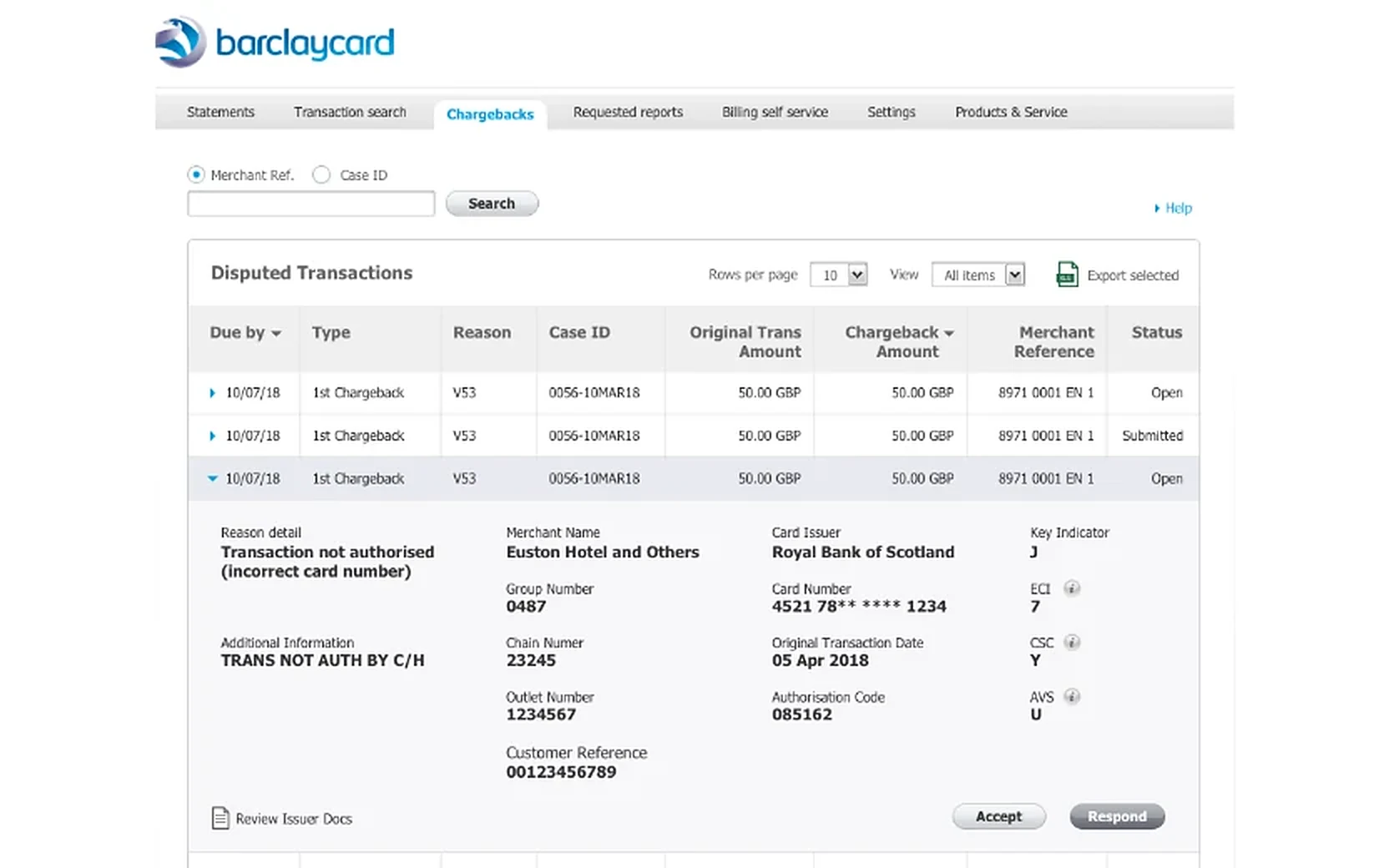
Three attempts at the same table. First: everything on the summary screen, complete but too busy to read. Second: columns cut, detail moved to a sliding panel, which fixed the density but broke the job, since the row no longer carried enough to decide without opening the case. Third: user research established the exact fields an agent needs to decide, cutting the heavy modal prototype down to one screen and three modal states, decided from the row in about five seconds. Then the real constraint arrived: the back end was 25 years old, forcing a reversion to an older Barclaycard design language. Compliance with a legacy system is a design material, not an afterthought.
Outcome
The portal replaced a fax and post process with a single record carrying its own state, evidence and history. The interface that shipped was the third attempt, the one that survived contact with real agents, because the research established what a decision actually requires rather than what a requirements document listed.